
Our Blog
“Welcome to the CISTCK Group Cybersecurity Blog! Dive into the dynamic world of cybersecurity with our expert insights, thought-provoking articles, and the latest developments in the field. Our blog is your go-to resource for staying ahead in the ever-evolving landscape of cyber threats. Explore topics ranging from threat intelligence and risk management to industry best practices and emerging technologies. Whether you’re a cybersecurity professional, IT enthusiast, or simply interested in safeguarding digital landscapes, join us on a journey of knowledge-sharing and discover actionable strategies to fortify your defenses. Stay informed, stay secure with the CISTCK Group Cybersecurity Blog.”

Your Automated Pentest Looks Clean. See What It Missed in This Expert Webinar
Your pentest report looks clean. That might be the problem. Run automated pentesting long enough, and the new findings start to dry up. By the third or fourth run, fewer issues appear. The report looks stable. Leadership reads "stable" as "secure." It usually isn't....
Microsoft Patches Record 206 Flaws, Including Three Zero-Days and Critical RCE Bugs
Microsoft on Tuesday released fixes for a record 206 security vulnerabilities impacting its software portfolio, including three flaws that have been publicly disclosed at the time of release. Of the 206 flaws, 39 are rated Critical, and 167 are rated Important in...
Anthropic Releases Claude Fable 5, Its Most Powerful AI Yet, With Cyber Safeguards
On June 9, Anthropic released Claude Fable 5, the most capable model it has ever made, generally available. It also did something unusual: it shipped one model as two products, split not by capability but by a layer of safety classifiers. Fable 5 goes to the public....

ServiceNow Flaw Exploited to Gain Unauthorized Access to Customer Instances
ServiceNow has warned about a security incident in which unknown threat actors exploited a flaw to obtain deeper unauthorized access to susceptible instances. "On June 5, 2026, ServiceNow applied a security update to hosted customer instances," the company revealed in...
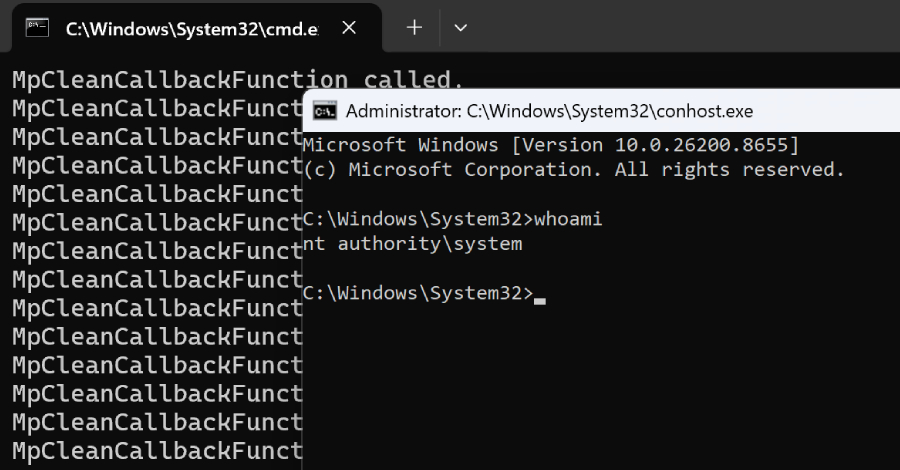
Microsoft Defender RoguePlanet Zero-Day Grants SYSTEM Access on Updated Windows
The anonymous security researcher going by the name Chaotic Eclipse (aka Nightmare-Eclipse) has released a proof-of-concept (PoC) exploit for yet another Microsoft Defender zero-day named RoguePlanet. "The exploit is a race condition, so it's a hit or miss," the...

Six Proto6 Vulnerabilities in protobuf.js Expose Node.js Apps to RCE and DoS
Cybersecurity researchers have flagged half a dozen vulnerabilities in protobuf.js, a JavaScript and TypeScript implementation of Protocol Buffers (Protobuf), that, if successfully exploited, could result in remote code execution (RCE) and denial-of-service (DoS)...

Meta to Use Off-Site Business Data for Feed and AI Personalization
Meta on Tuesday announced that it will use information shared by other businesses to personalize users' feed and responses from its artificial intelligence (AI) chatbot, expanding its scope beyond targeted ads. "Businesses often share information about people's...

Veeam Backup & Replication RCE Flaw Lets Domain Users Run Remote Code
Veeam has released security patches to address a critical flaw in its Backup & Replication software that could result in remote code execution. Tracked as CVE-2026-44963, the vulnerability carries a CVSS score of 9.4 out of a maximum of 10.0. "A vulnerability...

Microsoft Restores Some GitHub Repos, Keeps Others Offline as Miasma Probe Continues
Microsoft on Monday confirmed that it temporarily removed some GitHub repositories in response to a recent security incident that led to 73 of its open-source projects being compromised to inject an information stealer into the code. "Our priority is to protect...
WinRAR Flaw Exploited by Russia-Aligned Groups to Deploy Stealers in Ukraine
Two Russia-aligned cyber attack campaigns have continued to exploit a security flaw in WinRAR to target Ukrainian organisations, almost a year after patches for the vulnerability were released. The activity has been attributed by Trend Micro to Earth Dahu (aka...