
Our Blog
“Welcome to the CISTCK Group Cybersecurity Blog! Dive into the dynamic world of cybersecurity with our expert insights, thought-provoking articles, and the latest developments in the field. Our blog is your go-to resource for staying ahead in the ever-evolving landscape of cyber threats. Explore topics ranging from threat intelligence and risk management to industry best practices and emerging technologies. Whether you’re a cybersecurity professional, IT enthusiast, or simply interested in safeguarding digital landscapes, join us on a journey of knowledge-sharing and discover actionable strategies to fortify your defenses. Stay informed, stay secure with the CISTCK Group Cybersecurity Blog.”

Discord Introduces DAVE Protocol for End-to-End Encryption in Audio and Video Calls
Popular social messaging platform Discord has announced that it's rolling out a new custom end-to-end encrypted (E2EE) protocol to secure audio and video calls. The protocol has been dubbed DAVE, short for Discord's audio and video end-to-end encryption ("E2EE A/V")....

New PondRAT Malware Hidden in Python Packages Targets Software Developers
Threat actors with ties to North Korea have been observed using poisoned Python packages as a way to deliver a new malware called PondRAT as part of an ongoing campaign. PondRAT, according to new findings from Palo Alto Networks Unit 42, is assessed to be a lighter...

Chinese Hackers Exploit GeoServer Flaw to Target APAC Nations with EAGLEDOOR Malware
A suspected advanced persistent threat (APT) originating from China targeted a government organization in Taiwan, and possibly other countries in the Asia-Pacific (APAC) region, by exploiting a recently patched critical security flaw impacting OSGeo GeoServer...
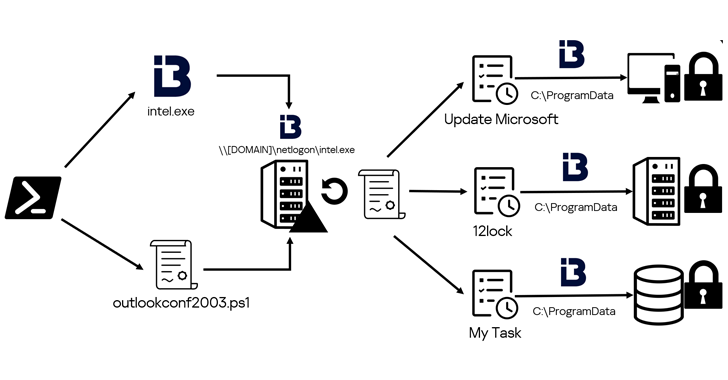
Hacktivist Group Twelve Targets Russian Entities with Destructive Cyber Attacks
A hacktivist group known as Twelve has been observed using an arsenal of publicly available tools to conduct destructive cyber attacks against Russian targets. "Rather than demand a ransom for decrypting data, Twelve prefers to encrypt victims' data and then destroy...

LinkedIn Halts AI Data Processing in UK Amid Privacy Concerns Raised by ICO
The U.K. Information Commissioner's Office (ICO) has confirmed that professional social networking platform LinkedIn has suspended processing users' data in the country to train its artificial intelligence (AI) models. "We are pleased that LinkedIn has reflected on...

Ukraine Bans Telegram Use for Government and Military Personnel
Ukraine has restricted the use of the Telegram messaging app by government officials, military personnel, and other defense and critical infrastructure workers, citing national security concerns. The ban was announced by the National Coordination Centre for...

Europol Shuts Down Major Phishing Scheme Targeting Mobile Phone Credentials
Law enforcement authorities have announced the takedown of an international criminal network that leveraged a phishing platform to unlock stolen or lost mobile phones. The phishing-as-a-service (PhaaS) platform, called iServer, is estimated to have claimed more than...

Passwordless AND Keyless: The Future of (Privileged) Access Management
In IT environments, some secrets are managed well and some fly under the radar. Here’s a quick checklist of what kinds of secrets companies typically manage, including one type they should manage: Passwords [x] TLS certificates [x] Accounts [x] SSH keys ??? The...

Iranian APT UNC1860 Linked to MOIS Facilitates Cyber Intrusions in Middle East
An Iranian advanced persistent threat (APT) threat actor likely affiliated with the Ministry of Intelligence and Security (MOIS) is now acting as an initial access facilitator that provides remote access to target networks. Google-owned Mandiant is tracking the...
Chrome Users Can Now Sync Passkeys Across Devices with New Google PIN Feature
Google on Thursday unveiled a Password Manager PIN to let Chrome web users sync their passkeys across Windows, macOS, Linux, ChromeOS, and Android devices. "This PIN adds an additional layer of security to ensure your passkeys are end-to-end encrypted and can't be...