
Our Blog
“Welcome to the CISTCK Group Cybersecurity Blog! Dive into the dynamic world of cybersecurity with our expert insights, thought-provoking articles, and the latest developments in the field. Our blog is your go-to resource for staying ahead in the ever-evolving landscape of cyber threats. Explore topics ranging from threat intelligence and risk management to industry best practices and emerging technologies. Whether you’re a cybersecurity professional, IT enthusiast, or simply interested in safeguarding digital landscapes, join us on a journey of knowledge-sharing and discover actionable strategies to fortify your defenses. Stay informed, stay secure with the CISTCK Group Cybersecurity Blog.”

SOC 3.0 – The Evolution of the SOC and How AI is Empowering Human Talent
Organizations today face relentless cyber attacks, with high-profile breaches hitting the headlines almost daily. Reflecting on a long journey in the security field, it’s clear this isn’t just a human problem—it’s a math problem. There are simply too many threats and...

New Linux Malware ‘Auto-Color’ Grants Hackers Full Remote Access to Compromised Systems
Universities and government organizations in North America and Asia have been targeted by a previously undocumented Linux malware called Auto-Color between November and December 2024, according to new findings from Palo Alto Networks Unit 42. "Once installed,...

Three Password Cracking Techniques and How to Defend Against Them
Passwords are rarely appreciated until a security breach occurs; suffice to say, the importance of a strong password becomes clear only when faced with the consequences of a weak one. However, most end users are unaware of just how vulnerable their passwords are to...

CERT-UA Warns of UAC-0173 Attacks Deploying DCRat to Compromise Ukrainian Notaries
The Computer Emergency Response Team of Ukraine (CERT-UA) on Tuesday warned of renewed activity from an organized criminal group it tracks as UAC-0173 that involves infecting computers with a remote access trojan named DCRat (aka DarkCrystal RAT). The Ukrainian...

Malicious PyPI Package “automslc” Enables 104K+ Unauthorized Deezer Music Downloads
Cybersecurity researchers have flagged a malicious Python library on the Python Package Index (PyPI) repository that facilitates unauthorized music downloads from music streaming service Deezer. The package in question is automslc, which has been downloaded over...

CISA Adds Microsoft and Zimbra Flaws to KEV Catalog Amid Active Exploitation
The U.S. Cybersecurity and Infrastructure Security Agency (CISA) on Tuesday placed two security flaws impacting Microsoft Partner Center and Synacor Zimbra Collaboration Suite (ZCS) to its Known Exploited Vulnerabilities (KEV) catalog, based on evidence of active...

LightSpy Expands to 100+ Commands, Increasing Control Over Windows, macOS, Linux, and Mobile
Cybersecurity researchers have flagged an updated version of the LightSpy implant that comes equipped with an expanded set of data collection features to extract information from social media platforms like Facebook and Instagram. LightSpy is the name given to a...

Belarus-Linked Ghostwriter Uses Macropack-Obfuscated Excel Macros to Deploy Malware
Opposition activists in Belarus as well as Ukrainian military and government organizations are the target of a new campaign that employs malware-laced Microsoft Excel documents as lures to deliver a new variant of PicassoLoader. The threat cluster has been assessed...
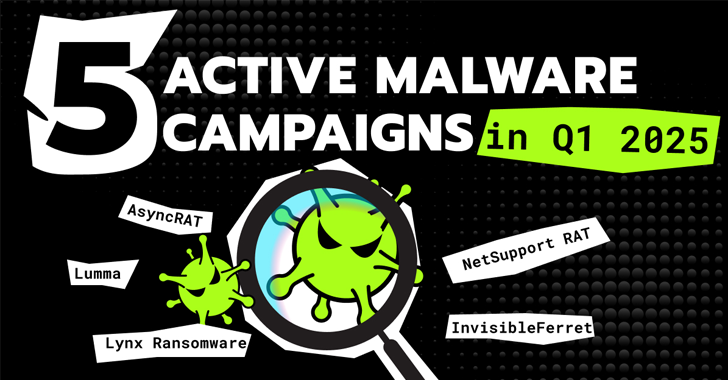
5 Active Malware Campaigns in Q1 2025
The first quarter of 2025 has been a battlefield in the world of cybersecurity. Cybercriminals continued launching aggressive new campaigns and refining their attack methods. Below is an overview of five notable malware families, accompanied by analyses conducted in...

2,500+ Truesight.sys Driver Variants Exploited to Bypass EDR and Deploy HiddenGh0st RAT
A large-scale malware campaign has been found leveraging a vulnerable Windows driver associated with Adlice's product suite to sidestep detection efforts and deliver the Gh0st RAT malware. "To further evade detection, the attackers deliberately generated multiple...