
Our Blog
“Welcome to the CISTCK Group Cybersecurity Blog! Dive into the dynamic world of cybersecurity with our expert insights, thought-provoking articles, and the latest developments in the field. Our blog is your go-to resource for staying ahead in the ever-evolving landscape of cyber threats. Explore topics ranging from threat intelligence and risk management to industry best practices and emerging technologies. Whether you’re a cybersecurity professional, IT enthusiast, or simply interested in safeguarding digital landscapes, join us on a journey of knowledge-sharing and discover actionable strategies to fortify your defenses. Stay informed, stay secure with the CISTCK Group Cybersecurity Blog.”

Rust-based Myth Stealer Malware Spread via Fake Gaming Sites Targets Chrome, Firefox Users
Cybersecurity researchers have shed light on a previously undocumented Rust-based information stealer called Myth Stealer that's being propagated via fraudulent gaming websites. "Upon execution, the malware displays a fake window to appear legitimate while...

The Hidden Threat in Your Stack: Why Non-Human Identity Management is the Next Cybersecurity Frontier
Modern enterprise networks are highly complex environments that rely on hundreds of apps and infrastructure services. These systems need to interact securely and efficiently without constant human oversight, which is where non-human identities (NHIs) come in. NHIs —...
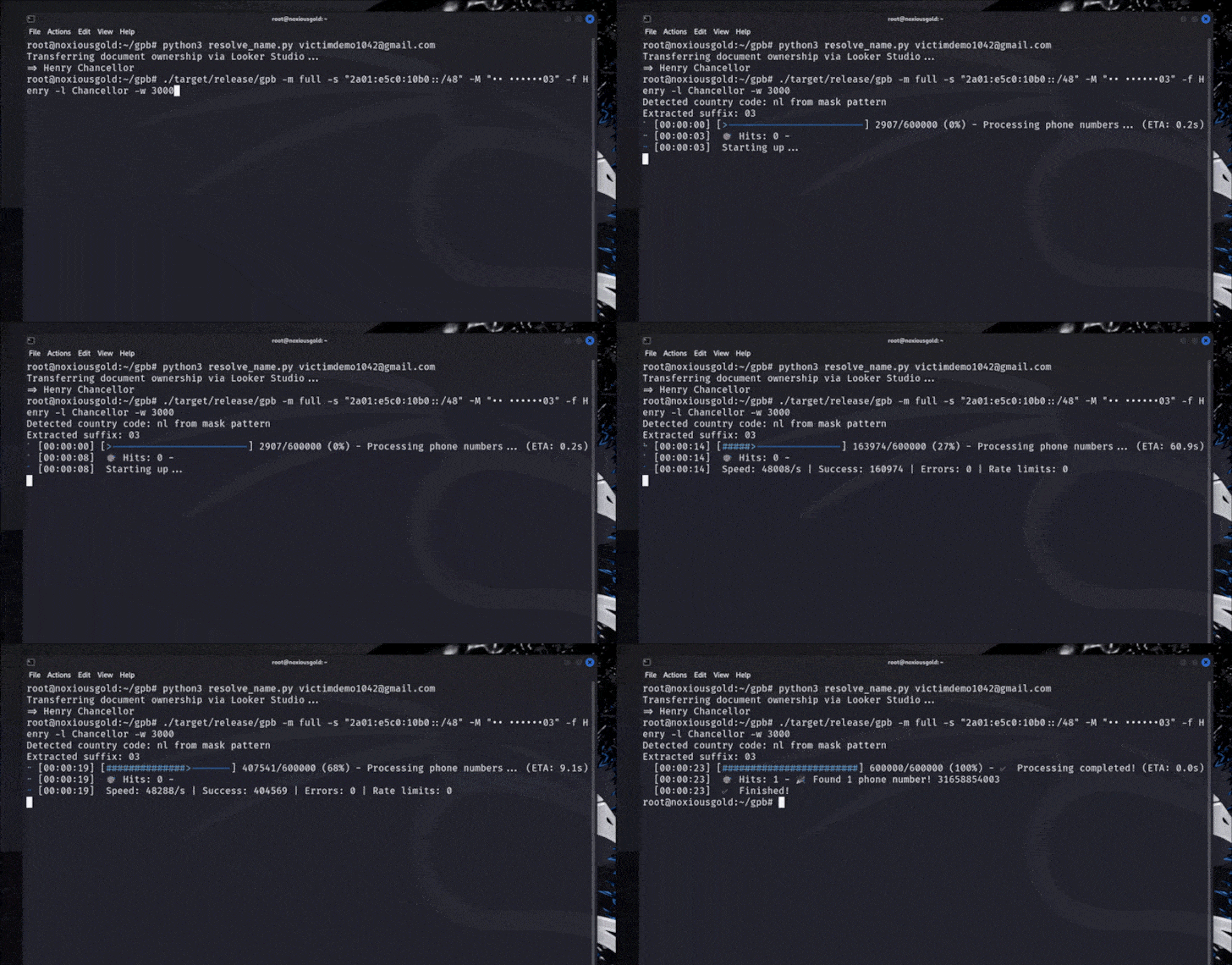
Researcher Found Flaw to Discover Phone Numbers Linked to Any Google Account
Google has stepped in to address a security flaw that could have made it possible to brute-force an account's recovery phone number, potentially exposing them to privacy and security risks. The issue, according to Singaporean security researcher "brutecat," leverages...
Rare Werewolf APT Uses Legitimate Software in Attacks on Hundreds of Russian Enterprises
The threat actor known as Rare Werewolf (formerly Rare Wolf) has been linked to a series of cyber attacks targeting Russia and the Commonwealth of Independent States (CIS) countries. "A distinctive feature of this threat is that the attackers favor using legitimate...

CISA Adds Erlang SSH and Roundcube Flaws to Known Exploited Vulnerabilities Catalog
The U.S. Cybersecurity and Infrastructure Security Agency (CISA) on Monday added two critical security flaws impacting Erlang/Open Telecom Platform (OTP) SSH and Roundcube to its Known Exploited Vulnerabilities (KEV) catalog, based on evidence of active exploitation....

Over 70 Organizations Across Multiple Sectors Targeted by China-Linked Cyber Espionage Group
The reconnaissance activity targeting American cybersecurity company SentinelOne was part of a broader set of partially-related intrusions into several targets between July 2024 and March 2025. "The victimology includes a South Asian government entity, a European...

Two Distinct Botnets Exploit Wazuh Server Vulnerability to Launch Mirai-Based Attacks
A now-patched critical security flaw in the Wazur Server is being exploited by threat actors to drop two different Mirai botnet variants and use them to conduct distributed denial-of-service (DDoS) attacks. Akamai, which first discovered the exploitation efforts in...

⚡ Weekly Recap: Chrome 0-Day, Data Wipers, Misused Tools and Zero-Click iPhone Attacks
Behind every security alert is a bigger story. Sometimes it’s a system being tested. Sometimes it’s trust being lost in quiet ways—through delays, odd behavior, or subtle gaps in control. This week, we’re looking beyond the surface to spot what really matters. Whether...

Think Your IdP or CASB Covers Shadow IT? These 5 Risks Prove Otherwise
You don’t need a rogue employee to suffer a breach. All it takes is a free trial that someone forgot to cancel. An AI-powered note-taker quietly syncing with your Google Drive. A personal Gmail account tied to a business-critical tool. That’s shadow IT. And today,...

OpenAI Bans ChatGPT Accounts Used by Russian, Iranian and Chinese Hacker Groups
OpenAI has revealed that it banned a set of ChatGPT accounts that were likely operated by Russian-speaking threat actors and two Chinese nation-state hacking groups to assist with malware development, social media automation, and research about U.S. satellite...